Controlling use case
Intercompany Reconciliation & Eliminations
Eliminate intercompany headaches with automated matching and balancing.
- Easy setup, no data storage required
- Free forever for core features
- Simple expansion with additional credits
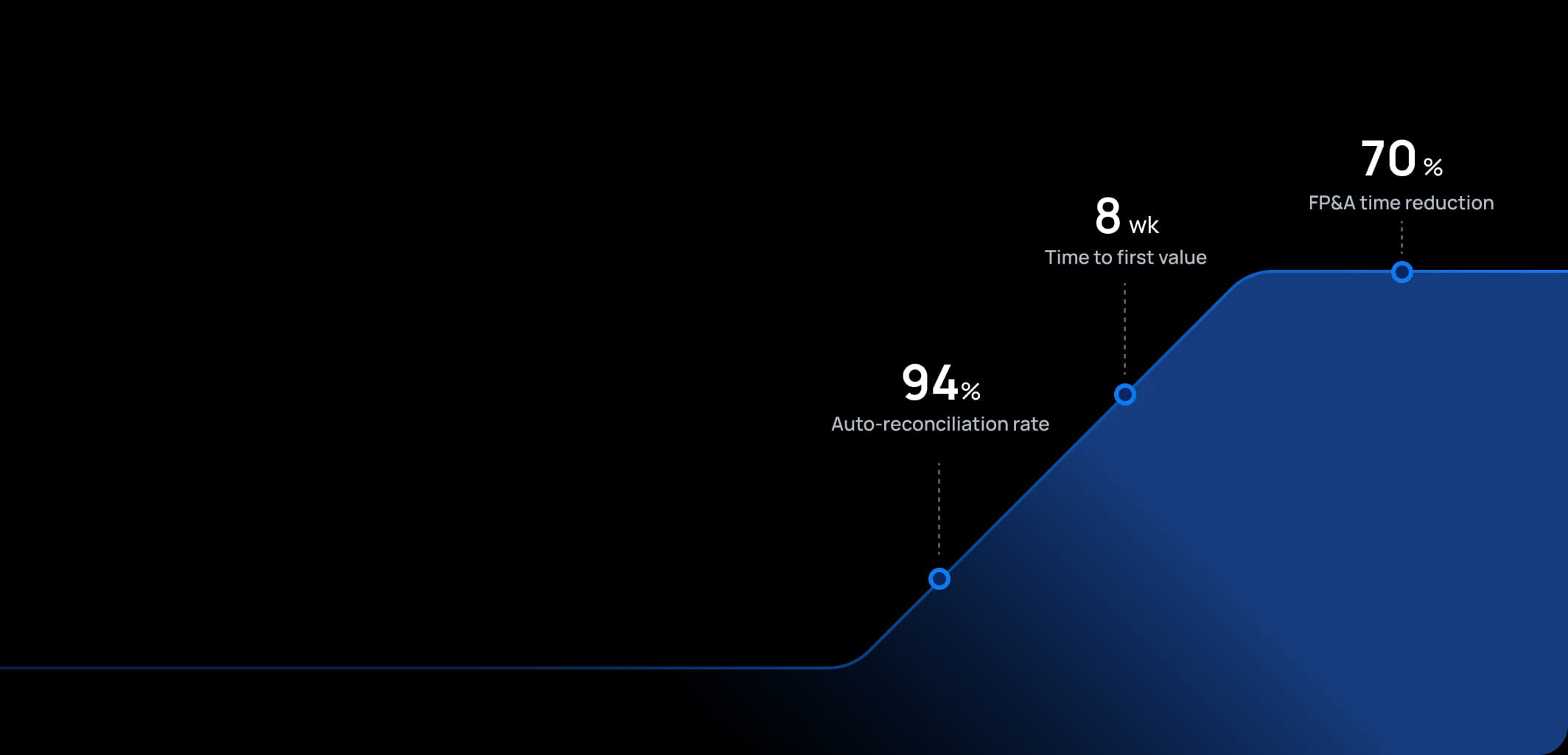
Time to first value
Man-days saved per year
Faster than spreadsheets
Dashboard shown is a conceptual example. Keboola integrates with any BI or analytics platform.

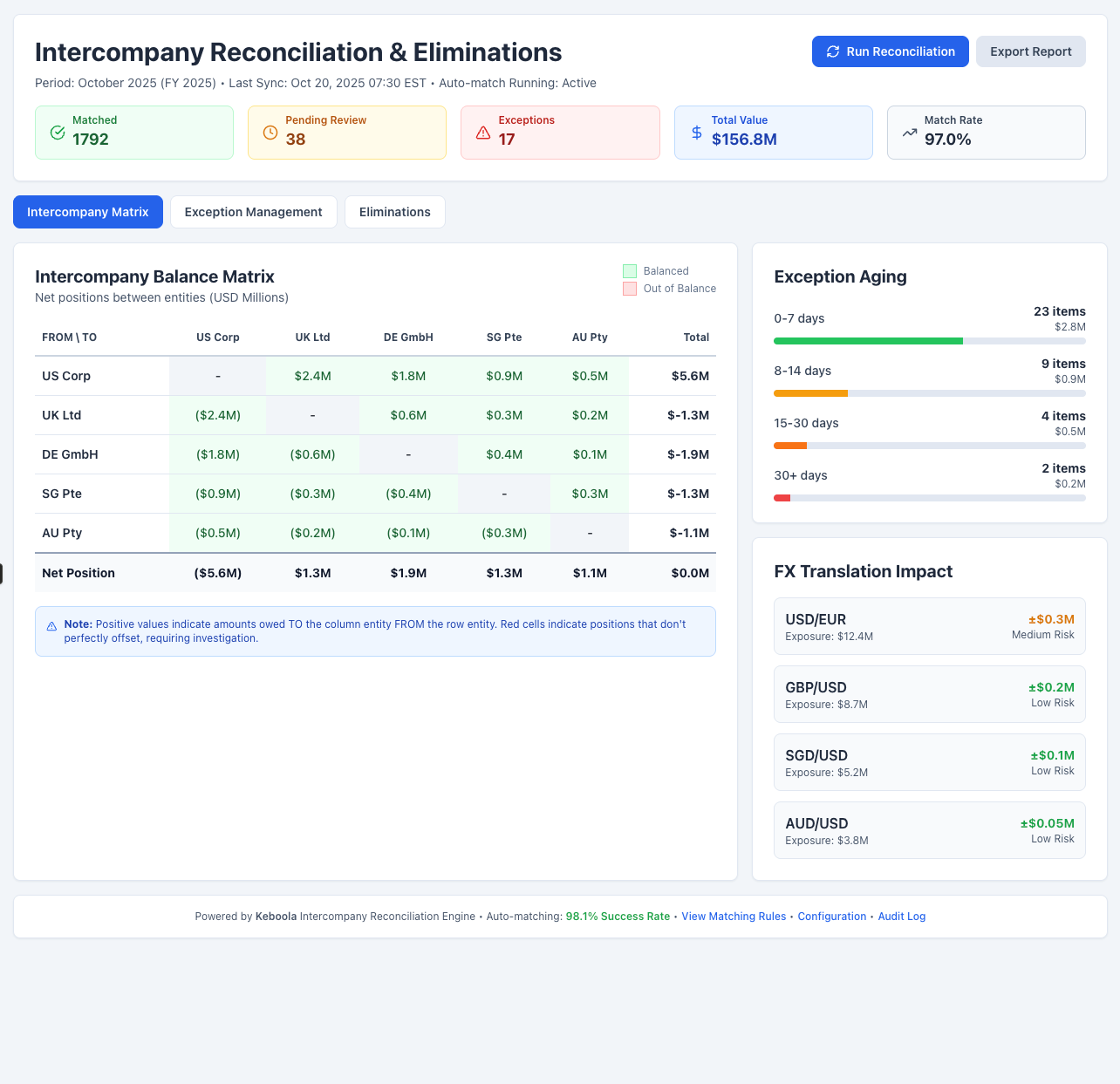
Dashboard shown is a conceptual example. Keboola integrates with any BI or analytics platform.
Overview
What this use case actually does.
Plug into what you already run
Your ERP, CRM, planning tools, warehouse — connected without replacing anything.
Governed, not glued together
Versioned transformations, lineage, and audit trail — every number traces to source.
Live in 8 weeks, owned by your team
Not a black box — your team configures, extends, and runs it from week one.
Eliminate intercompany headaches with automated matching and balancing.
This use case focuses on automating the reconciliation of intercompany transactions and balances across entities. It benefits Group Accountants and Controllers in organizations where subsidiaries regularly trade with each other (lending, selling goods, cross-charging expenses, etc.). Instead of juggling spreadsheets to match due-to and due-from entries or intercompany sales and purchases, the system automatically identifies mismatches and posts eliminations. The finance team gains a clear, real-time view of intercompany out-of-balances and can ensure the consolidated financials are free of double-counted revenue or expense. A veteran controller will appreciate how this frees them from the "reconciliation death loop" and ensures no intercompany difference slips through to the consolidated statements.
What Keboola does
What Keboola actually delivers.
No magic, no replatforming. Just connectors, governed transformations, and outputs your team owns from day one.
Auto-Matching & Instant Clearing
Keboola's platform automatically matches intercompany transactions (receivables vs payables, revenues vs expenses) using configurable rules (by entity, amount, document number, etc.). Mismatches are flagged in real-time.
Real-Time Intercompany Matrix
The use case delivers a live intercompany reconciliation report. Controllers can see an intercompany matrix that shows, for example, Entity A owes Entity B $X while B reports $Y – highlighting discrepancies immediately.
Automated Eliminating Entries
When it's time to consolidate, Keboola auto-generates eliminating journal entries for intercompany revenue, COGS, loans, or investments according to your accounting rules. This ensures that internal profits or balances don't overstate the group results.
Faster Close & Better Accuracy
By removing the intercompany bottleneck, companies have seen close cycles shrink significantly. Finance teams avoid those late-night sessions hunting for a $100 imbalance.
Connectors
Out of the box. No replacements.
This use case typically uses 4 connectors. Keboola ships 700+ more for the long tail.



Tangible deliverables
What lands in your team's hands.
Each role gets the format and the detail they need — already configured. Not slideware.
CFO
High-level intercompany status. Impact of intercompany on key metrics
Controller
Intercompany balance matrix (by entity pair). List of unmatched intercompany transactions over threshold. Intercompany profit elimination summary. Currency translation differences on intercompany. Aging of intercompany balances pending settlement.
Financial Accountant
Detailed reconciliation report showing for each counterparty: our recorded amount vs their recorded amount and the variance. Log of auto-eliminations posted. Schedule of intercompany loan interest eliminated. Confirmation checklist of intercompany invoices between entities


Talk to a
real human.
No bots, no SDR call sequence. A solutions engineer who runs use cases like this every single day.
Questions & answers
Things people always ask.
Everything your team, IT, and procurement will want to know — up front.