

One chart of accounts.
Every entity you own.
Keboola maintains your group chart of accounts as a governed single source of truth. Every entity’s accounts — SAP, NetSuite, Xero, Dynamics — map into one structure you bulk-edit across entities, with a changelog on every mapping change and lineage back to the source account. You do not need to fix your ERPs first.
Trusted by 1,000+ companies


The Problem
Mapping tables work at 2 entities. At 10, they go stale.
Every ERP names accounts differently.
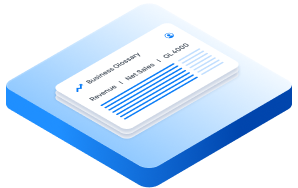
SAP GL 4000 is NetSuite ‘Sales Revenue’ is a Xero custom code. Reconciling them is a monthly manual project owned by whoever knows both systems — and it leaves when they do.
Every acquisition arrives with its own chart.
A new entity brings its own ERP and 1,200 accounts shaped by ten years of someone else’s decisions. Months of mapping later, the logic lives in a workbook tab — and the next deal starts the work over.
The CFO and the controller report different revenue.
Same period, same group — different account groupings, different totals. The discrepancy is explainable. Explaining it is what costs you the board’s confidence.
The mapping table has no audit trail.
Nobody can say who moved an account, when, or why. When a number is questioned — or restated — the answer lives in file versions and memory. An auditor cannot reconstruct that. Neither can you.
Unified Chart of Accounts
The group chart of accounts stops being a spreadsheet someone maintains.
Multi-entity bulk edits, a changelog on every mapping change, and an audit trail your auditor can follow on their own.
0wks
New entity onboarded — vs 6–9 months of manual mapping
0%
Traceable to source — from group P&L line to entity account
Zero
Manual mapping at close — rules re-apply every period
How it works
Connect
Pull account structures from every connected ERP at source — SAP, NetSuite, Xero, Dynamics. No manual exports. No uploads. Hours to connect, not weeks.
Map
Each entity’s accounts map into one group chart. Your controller defines and approves every match once; the mapping holds from then on. Need to reclass an account group-wide? One bulk edit applies across every entity.
Govern
Every mapping change lands in the changelog — who, when, what, why — and surfaces in a live audit feed. The trail runs from consolidated P&L line back to the source account. Your auditor can reconstruct any number without asking.
Propagate
Harmonized accounts feed the consolidation layer directly — mapping rules re-apply automatically every period. New entities onboard in 8 weeks, not 6–9 months.
Companies that fixed it
The companies that fixed the mapping layer.


Different account structures across every country operation.
70% faster month-end close, implemented in 2 months. One account structure across 30+ markets — and a 25% productivity gain for team leads.


Multi-currency, multi-ERP account harmonization at scale.
70% less FP&A time on reporting and 25% of all HQ reporting automated. Nine country operations report through one structure — new markets fold into the same mapping.
Why Keboola
Manual mapping in Excel has no audit trail, breaks on every acquisition, and lives in one person’s head.
Planning and consolidation tools connect above the chart of accounts and model whatever they find. Keboola fixes the layer they assume — a versioned, change-logged mapping in 8 weeks, alongside the ERPs you already run.

Questions & answers
Frequently Asked Questions
Everything finance, IT, and procurement will want to know — up front.


Resources for CFOs
Insights & conversations
for finance leaders.
Whitepapers, ebooks, implementation playbooks — and conversations with finance leaders operating in multi-entity, PE-backed, and post-acquisition environments.