CFO / Group Finance use case
Rolling Forecast & Continuous Planning
Stay ahead of change by continuously updating forecasts and adjusting plans on a rolling basis.
- Easy setup, no data storage required
- Free forever for core features
- Simple expansion with additional credits
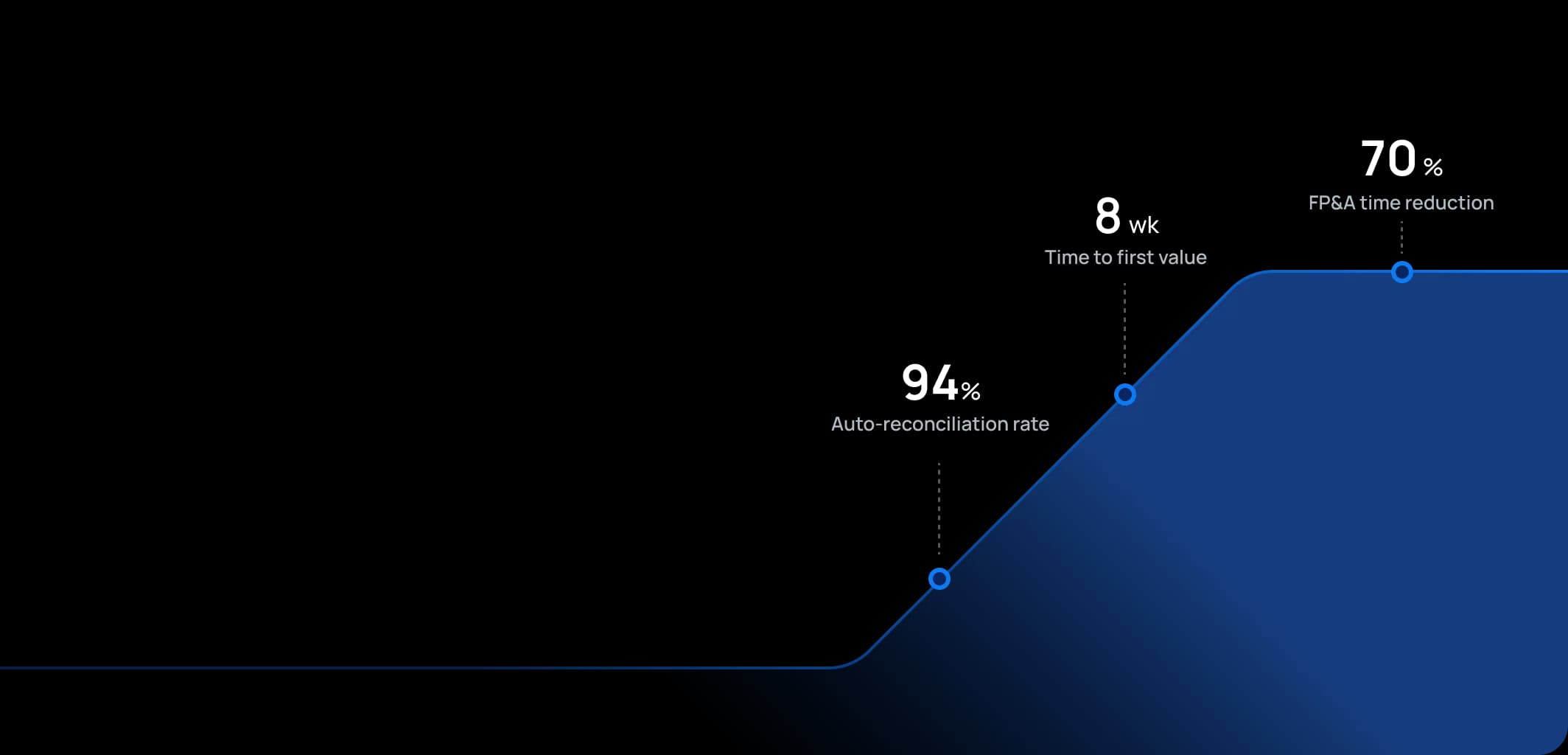
Time to first value
Man-days saved per year
Faster than spreadsheets
Dashboard shown is a conceptual example. Keboola integrates with any BI or analytics platform.

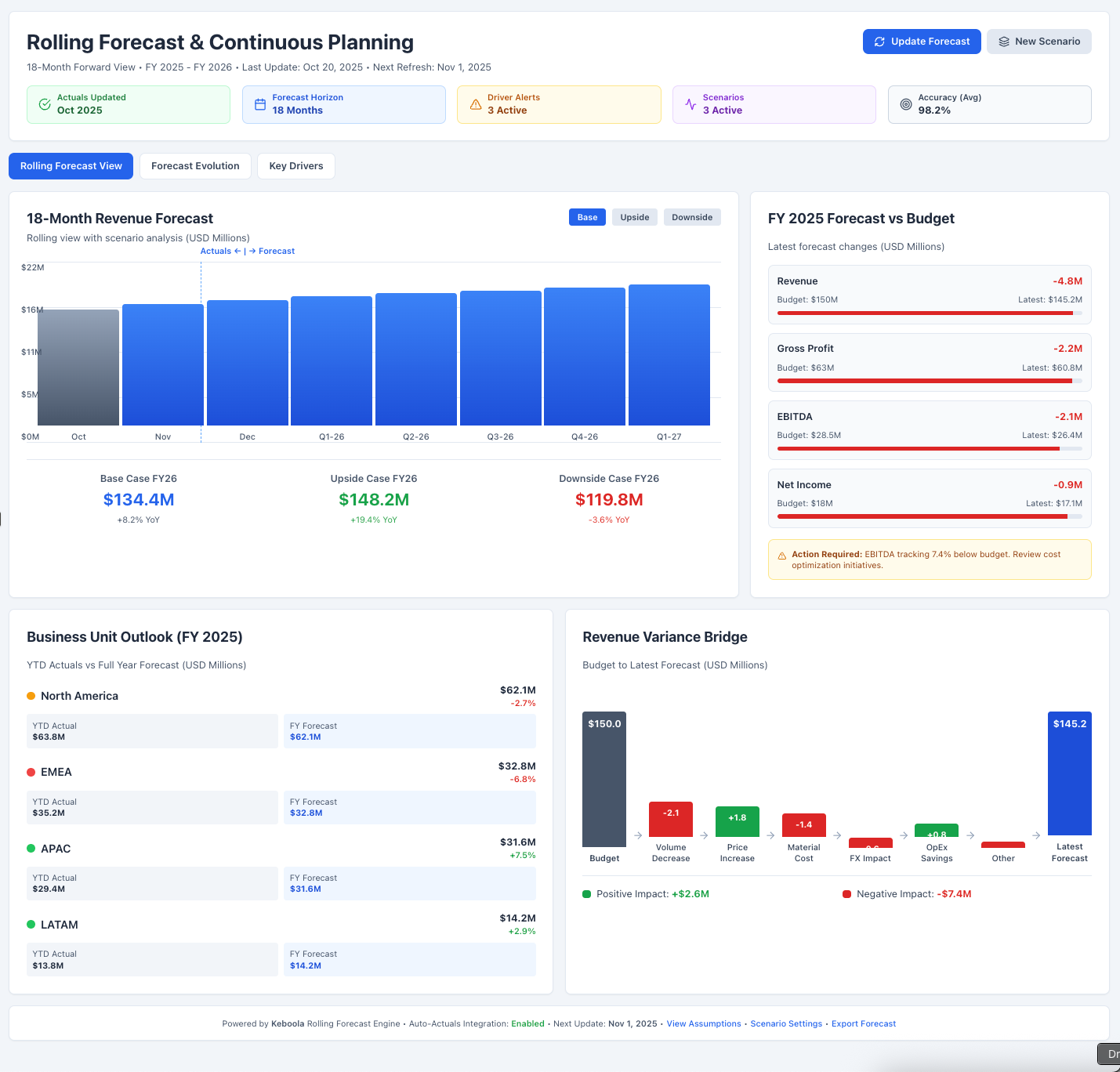
Dashboard shown is a conceptual example. Keboola integrates with any BI or analytics platform.
Overview
What this use case actually does.
Plug into what you already run
Your ERP, CRM, planning tools, warehouse — connected without replacing anything.
Governed, not glued together
Versioned transformations, lineage, and audit trail — every number traces to source.
Live in 8 weeks, owned by your team
Not a black box — your team configures, extends, and runs it from week one.
Stay ahead of change by continuously updating forecasts and adjusting plans on a rolling basis.
This use case is about moving from static annual plans to a rolling forecast model. Instead of waiting for the next annual cycle, finance continuously revises the outlook (e.g., adding a new quarter as one quarter passes, always maintaining a 4-quarter or 18-month forward view). It serves the FP&A team and business leaders who want agility. With Keboola integrating actuals quickly and providing an easy way to update assumptions, organizations can keep an updated financial forecast that reflects the latest reality. Complex industries with volatile markets (like consumer finance sensitive to interest rates, or retail dealing with fast-changing consumer trends) particularly benefit, as they can course-correct mid-year. The tone is one of proactive finance management – using data to foresee issues and avoid being locked into outdated plans.
The pain
Where the spreadsheet breaks.
These are the problems your team runs into every month — without a unified data layer, every workaround eventually fails.
Outdated Plans Mid-Year
Companies that only plan once a year often find by mid-year that their plan is obsolete
Resource Misallocation
If forecasts aren't updated, resources (budget, headcount, capital) might be stuck in areas that no longer need them
Cumbersome Manual Updates
Some companies attempt rolling forecasts in spreadsheets, but it's incredibly cumbersome
Weak Signal Detection
Without continuous planning, organizations can miss early indicators
What Keboola does
What Keboola actually delivers.
No magic, no replatforming. Just connectors, governed transformations, and outputs your team owns from day one.
Automated Actuals Integration
Keboola can automatically pull actuals (financial and operational data) at the close of each period into the forecast model.
Driver Updates and Re-forecast Triggers
The platform can be configured to flag when certain drivers deviate from assumptions, prompting a re-forecast.
Rolling Forecast Dashboard
Keboola enables creation of a special dashboard that shows the trajectory of forecasts over time.
Agility for Scenario Planning
Rolling forecasts in Keboola can be paired with scenario capabilities.
Connectors
Out of the box. No replacements.
This use case typically uses 8 connectors. Keboola ships 700+ more for the long tail.


Tangible deliverables
What lands in your team's hands.
Each role gets the format and the detail they need — already configured. Not slideware.
FP&A Director
Detailed rolling forecast output: a full P&L by month for the next 12–18 months updated with actuals to date, including key driver tables (like sales volumes, average selling prices, FX rates assumptions, etc.)
Department Manager
For their specific unit, a rolling outlook of their revenue and expense, so they can manage headcount or projects accordingly
Group CFO
the original budget vs the latest forecast for revenue, EBIT, and cash


Talk to a
real human.
No bots, no SDR call sequence. A solutions engineer who runs use cases like this every single day.
Questions & answers
Things people always ask.
Everything your team, IT, and procurement will want to know — up front.