





Finance says margins are fine.
Operations knows something is wrong.
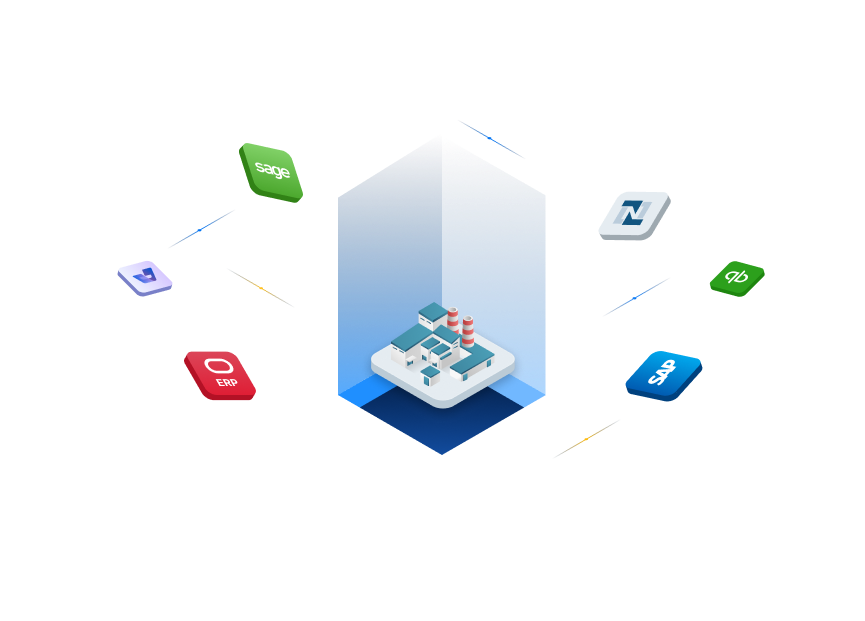
Stale standards. MES siloed from finance. Month-end COGS in Excel. Keboola unifies ERP, MES, and supply chain — so plant-level P&L matches what's happening on the floor.
Real-time
Cost variance visibility — not month-end
SKU-level
Contribution margin with full drill-through
One
Unified COGS figure across all plants
Zero
ERP or MES replacements required
The Problem
Standard costing updated annually — actual costs drift all year
Standards set once during budgeting. By Q2, raw material prices have moved, BOM components have changed, scrap rates shifted — but the standards haven’t. Plant controllers know the numbers are wrong. Finance is signing off on margins that don’t exist.
MES, ERP, and supply chain data never converge
Production actuals in the MES. Financial postings in the ERP. Procurement in a third system. Nobody has joined them — so variance analysis happens manually in Excel, after the close, by someone chasing three teams for source data. By then, the margin has already shipped.
No plant-level P&L — overhead allocation is educated guesswork
You can see consolidated COGS. You can’t see which plant, production line, or SKU is eroding it. Overhead absorption is applied at group level with assumptions that haven’t been validated against actual plant data. Pricing decisions are made on incomplete information.
What Keboola does
Step 01
Actual vs. standard cost variance — visible in real time, not at month-end
Production actuals from MES flow into the financial model continuously. Cost variances — material, labor, overhead — flagged as they emerge. Your plant controller sees the problem on Tuesday. Not after the close.
Step 02
Supply chain and finance aligned on the same data
Procurement costs, inventory movements, and BOM changes reflected in the financial model without a manual handoff. One version of COGS — across every plant, every period.
Step 03
Plant-level P&L with contribution margin by product line and SKU
COGS, labor absorption, overhead allocation broken down by plant, production line, and SKU. Drill from group margin to individual cost element. Pricing decisions based on actual margins — not annual standard cost assumptions.
Step 04
Finance and operations — finally working from the same numbers
Plant controllers and group finance see the same data model in one place. Variance analysis takes hours, not weeks. The conversation shifts from “whose numbers are right” to “what are we going to do about it.”
From the field


“The successful implementation of Keboola was a crucial step to become a digital company. It propelled us to the next level, equipped leaders with forward-looking business information.”
Thilo Kusch
Group CFO, P3 Logistic Parks
Results
What multi-plant finance teams achieve with Keboola.
Real-time
cost variance — no more month-end surprises
SKU-level
contribution margin with full drill-through to GL
One
unified COGS figure across all plants and periods
Zero
ERP or MES systems replaced

The Multi-Entity CFO Guide
Consolidation Without the Chaos
Cut consolidation from 3 weeks to 3 days — without replacing your ERP stack.


