Skip to content
CFO Business Breakfast — How to trust AI in financeRequest Invite
Insight · May 2026Pavel Doležal · Co-founder & CEO, Keboola

AI transformation:
decoration vs.
transformation.

Most companies are adding AI as a feature. The ones winning are rebuilding around it. What the difference looks like in practice — with real examples.

Decoration
Pipeline Health
💬Ask AI...

Five things to understand

If you read nothing else.

01

Decoration is visible

An AI chat interface on a dashboard. "Powered by AI" in marketing. A GPT wrapper around existing workflows. Easy to ship, easy to call AI — hard to tell from snake oil.

02

Transformation is operational

Your product itself becomes an AI agent. Workflows that were manual are autonomous. The human reviews, not executes. The output compounds.

03

The tell is in the architecture

Decoration: AI helps users understand the product. Transformation: AI is an actor in the product — it composes, it creates, it pins. The CLI has `compose` and `render` commands that AI calls.

04

One champion isn't a practice

Most companies are in "AI exploration" — one person who knows how to prompt. Transformation requires anyone on the team to get the same result. That reproducibility is the threshold.

05

The measurement changes

Decoration is measured by AI engagement. Transformation is measured by work eliminated. When your team can't imagine working without it — that's the signal.

The companies getting the most from AI aren't the ones with the most AI features. They're the ones who asked: “What would we build if AI could be a full actor in our system — not just an assistant?”

— Observation from building Keboola CRM with Claude Code, May 2026

Real examples

What transformation looks like in practice.

01

The dashboard that composed itself
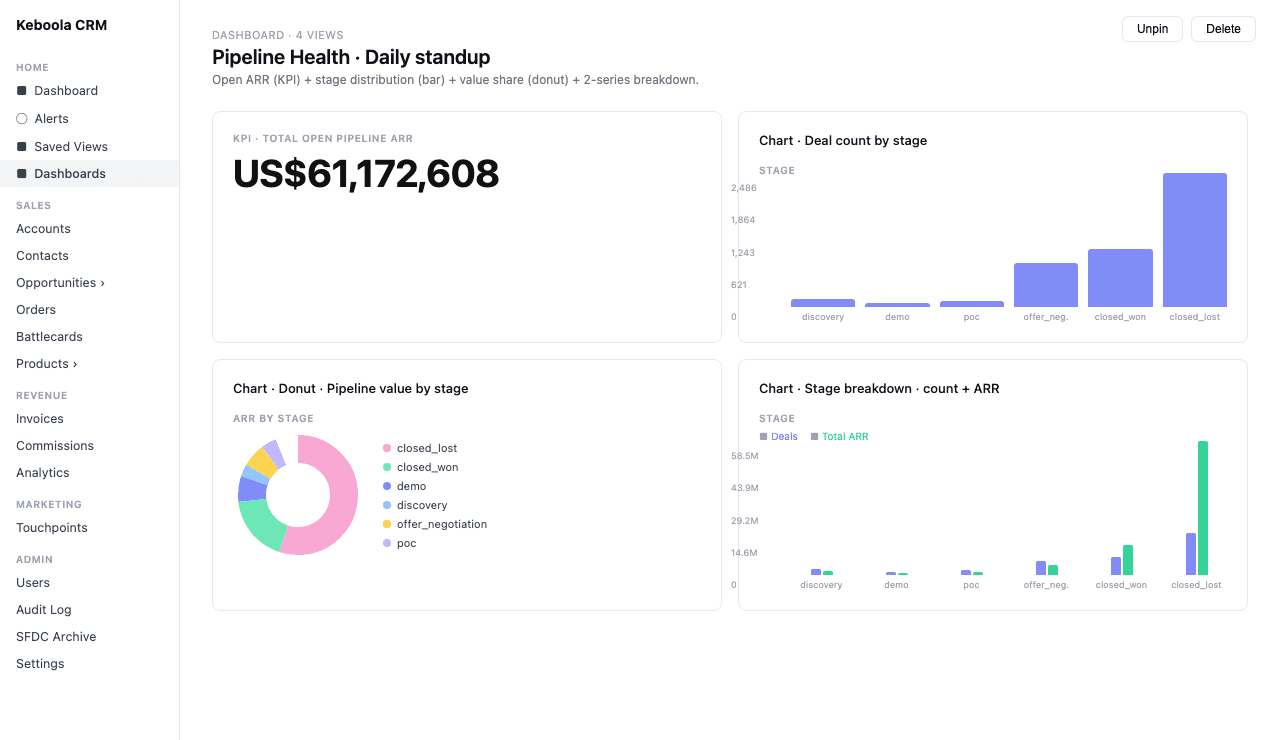
Keboola CRM — Pipeline Health dashboard with live charts, composed by Claude Code

Pipeline Health · Daily standup — composed atomically by Claude Code from saved views

This dashboard wasn't built by a developer. It wasn't configured by a product manager clicking through a builder UI. Claude Code called `crm dashboards compose` with a list of saved views and a title. The result: a Pipeline Health standup dashboard with open ARR ($61M), stage distribution, and value breakdown — live and queryable. That's transformation. Decoration would be adding a "Summarize this dashboard" button to an existing one.
02

The CLI as the proof point

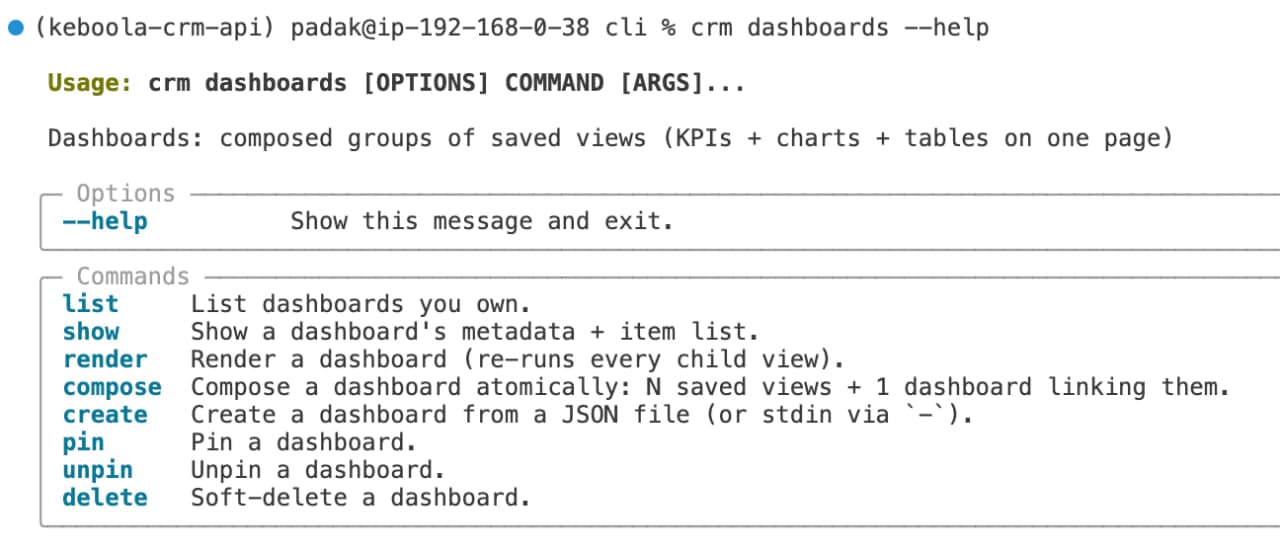
Terminal showing crm dashboards --help with compose, create, render, pin commands

crm dashboards --help — the commands that make AI an actor, not a viewer

Look at those verbs: list, show, render, compose, create, pin, unpin, delete. This isn't a read API. This is a write API. Claude Code can call `crm dashboards compose` to atomically create N saved views and link them into a dashboard. It can `pin` a dashboard to surface it for the team. It can `delete` what's no longer needed. When AI has verbs — not just nouns — you've crossed into transformation.

03

Views created by Claude Code — not by a human

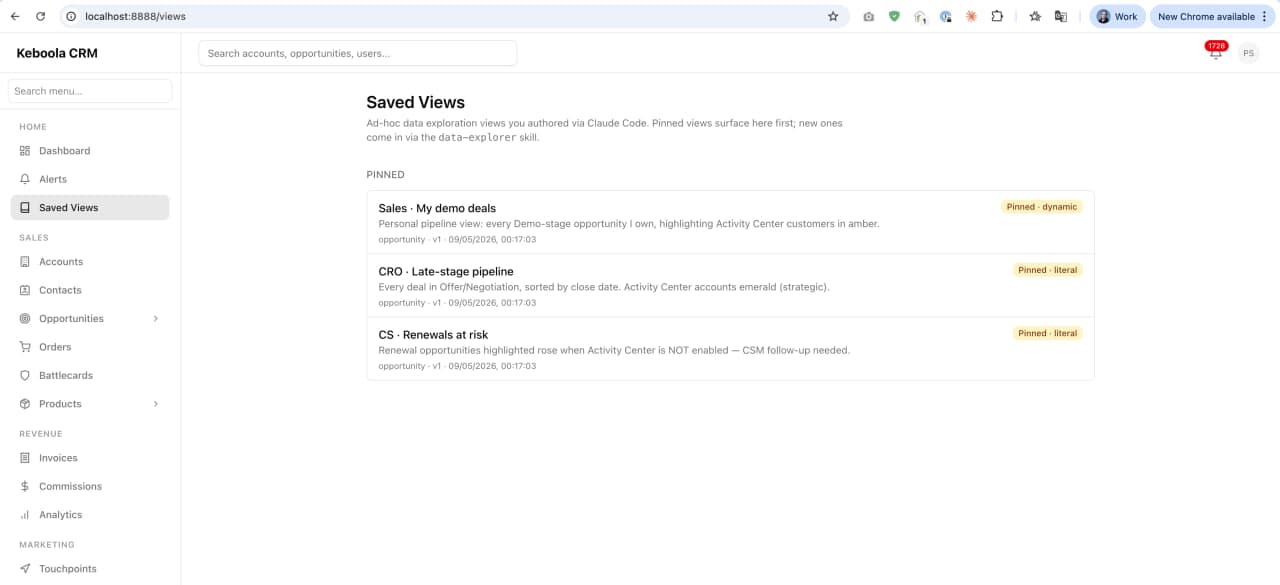
Keboola CRM Saved Views page showing pinned views created by Claude Code

Saved Views — created and pinned by Claude Code, surfaced to the whole team

These saved views — "Sales · My demo deals", "CRO · Late-stage pipeline", "CS · Renewals at risk" — were created by Claude Code as part of a data-explorer skill. Not templates. Not pre-configured by an admin. The AI understood the business context, wrote the views, and pinned them so they surface first. The team inherits working artifacts. That's the compounding effect of transformation: AI output becomes the baseline everyone builds on.

Patterns

What to avoid — and what to do instead.

Four anti-patterns we see repeatedly. Each pairs with a corrective that shifts from decoration to transformation.

No. 01

Don't

Add a chat interface to your existing product.

Users rarely ask it useful questions. It doesn't know your data model. It can't act. It's decoration with a UX cost.

Do instead

Let AI be an author in your product.

Design write APIs first. What should AI be able to create, update, pin, delete? The answer shapes your architecture.

No. 02

Don't

Build AI features for users to interact with.

Features require users. Transformation doesn't wait for users — it acts on their behalf.

Do instead

Build systems where AI acts autonomously.

The best AI workflows run in the background and surface results. The human reviews, not triggers.

No. 03

Don't

Measure AI by engagement or adoption.

Engagement metrics optimize for interaction. Transformation optimizes for elimination.

Do instead

Measure by work eliminated per week.

How many hours of manual work did AI remove this week? When that number compounds, you've transformed.

No. 04

Don't

Announce "AI-powered" before your team uses it daily.

Internal validation is the only honest test. If your own team doesn't rely on it, it's not ready.

Do instead

Ship when your team can't imagine working without it.

The bar: if we removed this capability tomorrow, would the team notice within 24 hours?

Keboola

Ready to move from decoration to transformation?

Talk to us about what AI-ready data infrastructure looks like for your business — and what the first 8 weeks look like.